PDC’s N/NE Economic Develpment Initiative Raises Doubts

Via the Sentinel:

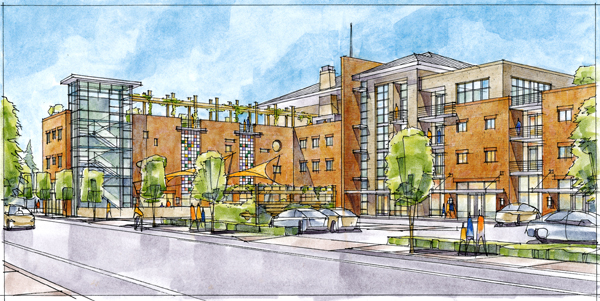
Mistrust, doubt unleashed by N/NE urban renewal
Submitted by Sentinel News Service on Wed, 09/02/2009 – 3:45pm.

“I’m not sure the PDC has the guts to change what’s going on,” said James Poise, owner of the E-Mat Cafe on Northeast MLK Jr. Boulevard. Posey, one of Northeast Portland’s longtime African American residents, stands before a packed room at the Elks Lodge on North Tillamook Street. It’s a sweltering night in August, and over 50 residents have turned out to give the Portland Development Commission a piece of their minds.

“We got nice bike paths, but right down the street we have people living on the streets,” Posey continues. “The priorities are all screwed up.”
One after the other, residents tell the same story: Decades before, urban renewal bulldozed the heart out of this once predominantly African American neighborhood and left only vacant lots and abandoned buildings in its wake. Recently, investment has come, but many longtime black residents don’t see their lot in life improving.

“I’m wondering what PDC is really doing for the neighborhood,” Adron Hampton wondered. “I don’t see a thing done in this community.”

Since last December, the PDC has been considering consolidating or modifying the two vast urban renewal districts that cover North and inner Northeast Portland. Together, the Interstate Corridor and Oregon Convention Center Urban Renewal Areas (ICURA and OCCURA) comprise some 3,769 acres. This year those zones will set aside approximately $47 million in neighborhood tax dollars for regional and local improvement projects.

On Aug. 19, the first of 11 citizen advisory meetings convened to discuss just how to divide, expand or extend the city’s urban renewal areas in this huge swath of territory.

Read the full story at:http://www.portlandsentinel.com/?q=node/5095

http://www.pdc.us/four/nnestudy/default.asp

Community Building Donations Accepted on NECN Website

The Northeast Coalition of Neighborhoods is pleased to announce that we now have increased our capacity to accept donations for multiple community building efforts in North and Northeast Portland Neighborhoods.

Visit www.necoalition.org and click on “Donate to the NECN”.

You will find a donation page with a few options to donate to NECN General Fund, Community Building Fund, FoodShare Fund Northeast, as well as any one of our fiscal-sponsored projects including:
o Blue Door Project, neighbors helping neighbors
o CHOMPER, a entrepreneurship program connecting youth and farms
o Good in the Neighborhood Multicultural Music and Food Festival
o Kukatonan Childrens’ African Dance Troupe
o Next Generation of Leaders, youth leadership program
o Northeast Family Cooperative
o Northeast Portland Tool Library

There are two ways to donate:
1. Use the donation form that can be printed out and mailed in with a check. Simply follow the instructions on the form.
2. Use the donate button to contribute by credit card through our PayPal account.

Upon receipt, the donor will receive a big THANK YOU and the donation will be directed to the appropriate account, fund, association or project.

Please check this out and let us know how it works for you or others. We are always interested to learn how we may be able to improve the donation process.

We look forward to increasing the funds available to support our shared efforts to build more livable neighborhoods in our community.

Feel free to contact us with any questions you may have.

Sincerely,
Paige S. Coleman, Masters of Sustainable Business Administration
Executive Director
Northeast Coalition of Neighborhoods
4815 Northeast Seventh Avenue, Portland, OR, 97211
503-823-4575 main office
503-823-3151 direct line
503-823-3150 fax
paige@necoalition.org
www.necoalition.org
Building livable communities since 1974

King Farmers Market Supplements Food Stamps

Photo by: Kenneth Aaron

Photo by: Kenneth Aaron

Via the Skanner:

Program Boosts Food Stamps at King Farmers Market
http://www.theskanner.com/index.php?action=artd&artid=9586

The recently opened King Farmers Market is now giving Oregon Food Stamp recipients an extra boost. With the help of the Northeast Coalition of Neighborhoods, the Portland Farmers Market and the Alberta Food Co-Op, the Foodshare Fund Northeast will give users of Food Stamps an extra $5 at the King Farmers Market.
The market is open 10 a.m. to 2 p.m. on Sundays until October 25th near the intersection of NE 7th Avenue and Wygant Street.

Each Portland Farmers Market accepts EBT transactions. Recipients of Food Stamps merely need to convert their EBT credits into EBT tokens at the market’s information booth. The tokens can only be used for fruits, vegetables, meats, fish, poultry, dairy and seeds and plants intended for growing food. They can’t be used for pre-made or hot foods.
The fund began with a $3,000 grant from Alberta Co-op Grocery and a matching donations from the Northeast Coalition of Neighborhoods and the King Farmers Market Advisory Council. With future donations, organizers are hoping to expand the program by giving additional food credits to people in need.

Contributions can be mailed to 4815 NE 7th Ave. Portland, OR 97211 or online at http://www.necoalition.org.

Groundwork Portland Turns One

Groundwork PortlandGroundwork Portland: everyone has a right to a livable community

Almost four years ago, Kevin Odell of OPAL, Clark Henry of the City of Portland Brownfield Program, Connie Ashbrook of Oregon Tradeswomen, Inc, Will Newman of Oregon Sustainable Agriculture Landtrust, Jeff Berbetsky of Restorical Research, and Joice Taylor of North/Northeast Business Association bonded over a dream of bringing much-needed resources to Portland neighborhoods overwhelmingly- and unjustly-burdened by urban pollutants, a lack of investment in community-centered development, and the pressures of gentrification.

One year ago, in September of 2008, Groundwork Portland opened its doors to organize low-income communities, communities of color, and youth around vacant land in their neighborhoods, plan for its redevelopment, and access the resources necessary to transform eyesores into community assets like community centers, community gardens, locally-owned businesses, and parks.

Over the past year, Groundwork Portland has been proud to collaborate with many different organizations and communities.

In the spring, Groundwork Portland launched Our Portland, a community-centered engagement program with seniors at Mt. Scott Learning Center to evaluate environmental justice issues in the Foster-Powell Neighborhood. The seniors joined community leaders on tours in their neighborhood to learn about environmental justice issues like brownfields, urban renewal, and gentrification. The program ended with Intersections, the art show they put on in their high school to showcase their photographic explorations of these issues.

While engaging the students in a conversation about environmental justice issues in their neighborhood, Groundwork Portland helped the school take on a project in their own backyard. Volunteers of Groundwork Portland coordinated the transformation of Mt. Scott Learning Center’s parking lot into a lush garden, basketball court, and outdoor lunch area. Over the course of three work days, more than 200 volunteers from the community pitched in to take out parking spaces, plant, paint, and otherwise spiff up this small charter school.

Last winter, Groundwork Portland joined forces with OSALT to begin the cleanup and creation of Emerson Street Garden. This summer, more than 65 kids from the Blazers Boys and Girls Club were the first to get their hands dirty, with a small container garden lush with all the fixings for salsa.

Over the coming year, Groundwork Portland and OSALT will hold garden planning sessions so everyone can chime in about what they want to grow. GeoEngineers, the local engineering firm that’s donating all necessary remediation services, will continue testing and remediation plans to ensure that the garden is safe enough for everyone to enjoy.

In addition, Groundwork Portland helped more than 50 community organizations like churches, schools, and community-centered nonprofits answer questions and access resources they needed for their own work to transform eyesores into assets. We offer a wide range of support to our partners, from research to joint grant applications. Contact Groundwork Portland for a copy of our “What’s in Your Garden?” brochure to help you evaluate the safety of your garden project, or to get more information about partnering with Groundwork Portland.

This has been a wonderful year for Groundwork Portland, and for me, so it is with no little sadness that I say goodbye to all of you. Today is my last day with Groundwork Portland. It has been wonderful working with you. The energy you bring to community-based projects is inspiring; I can’t wait to see what you accomplish next. Feel free to email me and tell me all about it.

Andrea Hamberg
Program Manager

Groundwork Portland: because everyone has a right to a livable community
2407 SE 49th Ave
Portland, OR 97206
503-467-4567
info@groundworkportland.org
www.groundworkportland.org

2010 Neighborhood Small Grants Program, Applications due Monday, Nov. 2, 2009

Office of Neighborhood InvolvementThe City of Portland, Office of Neighborhood Involvement and seven neighborhood District Coalitions announce the 4th year of the Neighborhood Small Grants Program with $178,830 available to neighborhood and community-based organizations. The grants program’s goal is to provide neighborhood and community-based organizations an opportunity to build community, attract new and diverse membership, and sustain those already involved. Grants will be awarded on a competitive basis. Proposals are due no later than 2:00 PM, Monday, November 2, 2009. More information can be found at www.portlandonline.com/oni.

In the first three years of the grant program $553,847 was awarded to 271 neighborhood and community organization projects. The average grant award was $1.972; 127 neighborhood projects were funded along with 102 projects (38%) initiated by underrepresented organizations working with people of color, immigrants and refugees, lowincome families, youth and people with disabilities. The remaining organizations represented environmental, crime prevention, business, arts and culture organizations and associations.