Black History Month–Day 6

In honor of Black History Month, here are few profiles of contributors to history of African descent:

George Washington Carver

Inventor of Over 300 Peanut Products

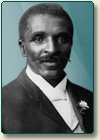
George Washington CarverGenerally, when people think of famous African-American inventors, one of the first names that springs to mind is George Washington Carver. Perhaps most famously, Carver’s inventions included the discovery of over 300 different uses for peanuts – such as making cooking oil, axle grease and printer’s ink. But despite his penchant for inventing, Carver was never interested in money or prestige so much as helping his fellow man.

Born at the end of the civil war, George Washington Carver displayed a strong desire for knowledge from an early age and took particular interest in plants. As a young boy, Carver became known as the “plant doctor” and was regularly called upon by neighbors to “cure” ailing plants. But it wasn’t until late in his twenties that Carver had the opportunity to study plants more thoroughly. While initially enrolled at Simpson College to study art and piano, Carver transferred to Iowa State College of Agriculture and Mechanic Arts (now known simply as Iowa State University) to follow his passion.
Continue reading

Black History Month–Day 5

In honor of Black History Month, here are few profiles of contributors to history of African descent:

First Field Officer in the U.S. Army

Maj. Martin Robison Delany: He was the first African-American field officer in the U.S. Army. He led the 52nd U.S. Colored Troops Regiment and became the first line officer in U.S. Army history. He was accepted at Harvard Medical School but was kicked out after three weeks when white students petitioned for his removal.

Marie Van Brittan Brown

Home Security Inventions

While home security systems today are more advanced than ever, back in 1966 the idea for a home surveillance device seemed almost unthinkable. That was the year famous African-American inventor Marie Van Brittan Brown, and her partner Albert Brown, applied for an invention patent for a closed-circuit television security system – the forerunner to the modern home security system.

Brown’s system had a set of four peep holes and a camera that could slide up and down to look out each one. Anything the camera picked up would appear on a monitor. An additional feature of Brown’s invention was that a person also could unlock a door with a remote control.
A female black inventor far ahead of her time, Marie Van Brittan Brown created an invention that was the first in a long string of home-security inventions that continue to flood the market today.

Thanks to Tanisha Jones and her daughter Sinai for compiling these profiles from the following sources:

1) The Encyclopedia of African-American Heritage, by Susan Altman
2) The Roots website, theroots.com
3) Famous Black Inventors website, black-inventor.com

Black History Month–Day 4

In honor of Black History Month, here are few profiles of contributors to history of African descent:

Dr. Patricia Bath

Fight for the Right to Sight

Imagine living in a world ranging from hazy, clouded vision to that of total darkness for 30 years. Before 1985, that was the plight of those with cataracts who did not want to risk surgery with a mechanical grinder. Now imagine sitting in a doctor’s office without being able to see her as she explains that it may be possible to restore your vision. You can’t tell by studying body language whether to trust this person or if they’re pulling your leg. All you have to go by is the sound of the voice assuring you that this procedure is safe, more accurate and more comfortable than traditional cataract surgery.
As a noted Opthamologist and famous black inventor, Dr. Patricia Bath has dedicated her life to the treatment and prevention of visual impairments. Her personal belief that everyone has the “Right to Sight” led to her invention in 1985 of a specialized tool and procedure for the removal of cataracts. With the Laserphaco Probe and procedure, Dr. Bath increased the accuracy and results of cataract surgery, which had previously been performed manually with a mechanical grinder.

The difference between the old method and her new invention was the difference between the use of highly accurate laser technology and the somewhat subjective accuracy of a mechanical device. The Laserphaco Probe combined an optical laser, irrigation system and suction tubes. In use, the laser is inserted into a tiny incision on the eye; the laser then vaporizes the cataract and lens material, which is removed via the suction tubes. A replacement lens is then inserted on the eye.
With the Laserphaco Probe invention and the development of the procedure for its use, Dr. Bath helped restore the sight of several people who had been blinded by cataracts for up to 30 years. Imagine the joy they felt when they opened their eyes to see Dr. Patricia Bath’s smiling face for the first time.

Thanks to Tanisha Jones and her daughter Sinai for compiling these profiles from the following sources:

1) The Encyclopedia of African-American Heritage, by Susan Altman
2) The Roots website, theroots.com
3) Famous Black Inventors website, black-inventor.com

Portland Seeks Input on Earthquake Plan

The Portland Bureau of Emergency Management (PBEM) wants to hear your thoughts about our city’s newly proposed earthquake response document.

Having grown into a major city long before scientists discovered its unique seismic vulnerabilities, Portland is now expected to experience a potentially devastating earthquake of magnitude 9.0 or greater. Work is underway to identify those vulnerabilities and make Portland a more earthquake-resilient city. This work–now embodied in the Portland Bureau of Emergency Management’s new Earthquake Response Appendix–will help lessen the severity of an earthquake’s impact on residents.  See pp. 53-54 on how to prepare your household.

The Earthquake Response Appendix is a supplement to the City’s Basic Emergency Operations Plan and a framework for Portland’s ever-evolving approach to earthquake response. Soon, this document will reach Portland City Council for consideration. In the meantime, PBEM is asking the public to thoroughly examine the appendix and provide feedback.

To learn more about the threats facing Portland’s energy, water, sewer, transportation, communication and building infrastructures; to understand the roles elected leaders, city officials, emergency responders, the private sector and community-based organizations play in the context of earthquake response; and to understand the partnerships established among public and private agencies to help support this response, please read the appendix by clicking here.

To provide insight and comments about the document, click here and fill out the feedback form.

Black History Month–Day 3

In honor of Black History Month, here are few profiles of contributors to history of African descent:

Alexandre Dumas

(1802-1870), was a novelist; dramatist of French and Afro-Carribean descent who lived in France.  He was the author of The Three Musketeers and The Count of Monte Cristo, he also wrote 20 volumes of memoirs. 


Otis Boykin

Invented an improved electrical resistor

Few inventors have had the lasting impact of Otis Boykin. Look around the house today and you’ll see a variety of devices that utilize components made by Boykin – including computers, radios and TV sets. Boykin’s inventions are all the more impressive when one considers he was an African American in a time of segregation and the field of electronics was not as well-established as it is today. Continue reading